天才万博2020
天才万博の空間設計において目指したのは、ファンタジーを再現することではありません。
設計の対象となったのは、物語そのものではなく、物語が立ち上がるための構造でした。
東京・鶯谷にある東京キネマ倶楽部は、かつてキャバレーとして人々の享楽と祝祭を受け止めてきた劇場です。駅から跨線橋を渡り、ラブホテル街を横目に、トンネル状の通路をくぐる。そのアプローチは都市の偶然によって生まれたものですが、同時に日常から非日常へと身体の感覚を移行させるプロセスでもあります。
天才万博では、この現実の都市構造をそのまま読み替え、キネマ倶楽部をえんとつ町の音楽劇場として再解釈しました。
重要だったのは、世界観を説明することではなく、現実の風景にわずかな揺らぎを与えることです。
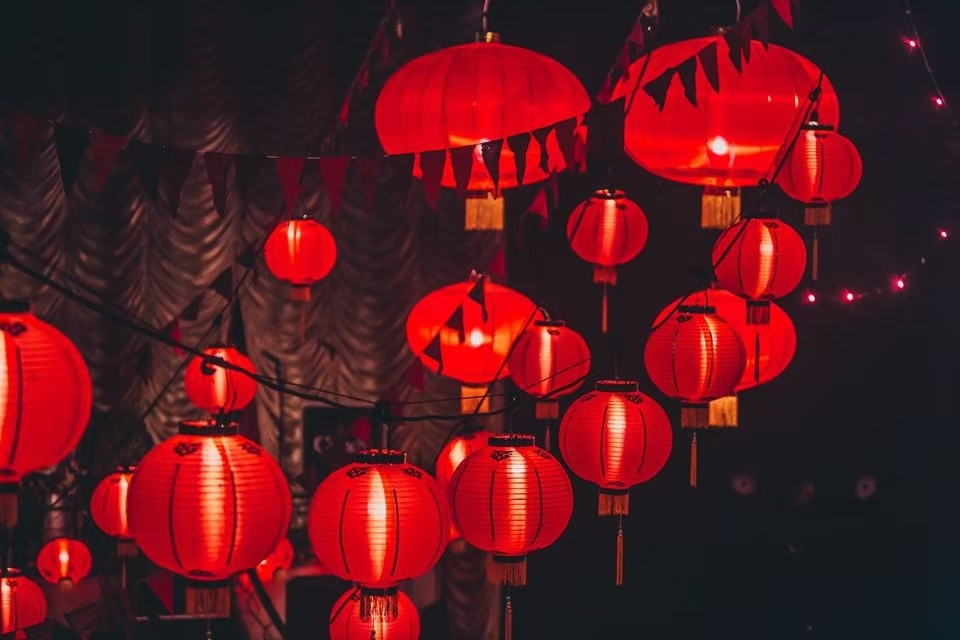
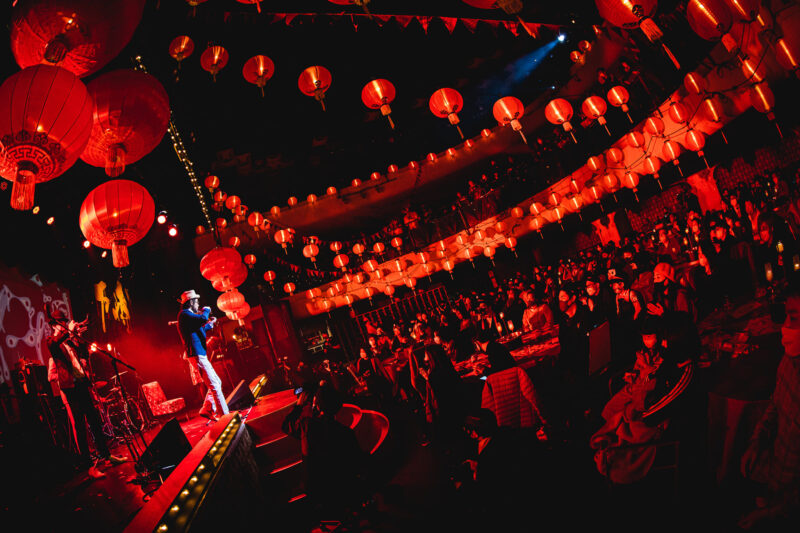
提灯が吊られ、煙が立ち上り、ネオンと光が混ざり合う。
しかしそこにキャラクターは登場せず、ここがえんとつ町であると明示されることもありません。
テーマパークのように来場者は物語を信じさせられるのではなく、自らの感覚によって物語を発見していく。その状態を成立させるための設計が行われています。
ステージに設置された塔状の装置は、その象徴的な存在です。
それは煙突にもスピーカーにも見える形態を持ちながら、実際には音を出していません。足元から噴き出すスモークがライティングの光を可視化し、観客の視覚に音が存在しているという感覚を生み出します。
意味は装置に固定されず、観る人の解釈によって確定する。
この考え方は、観測によって状態が決定される量子論的な世界観にも近く、空間の意味を設計者ではなく体験者側に委ねる試みでもあります。
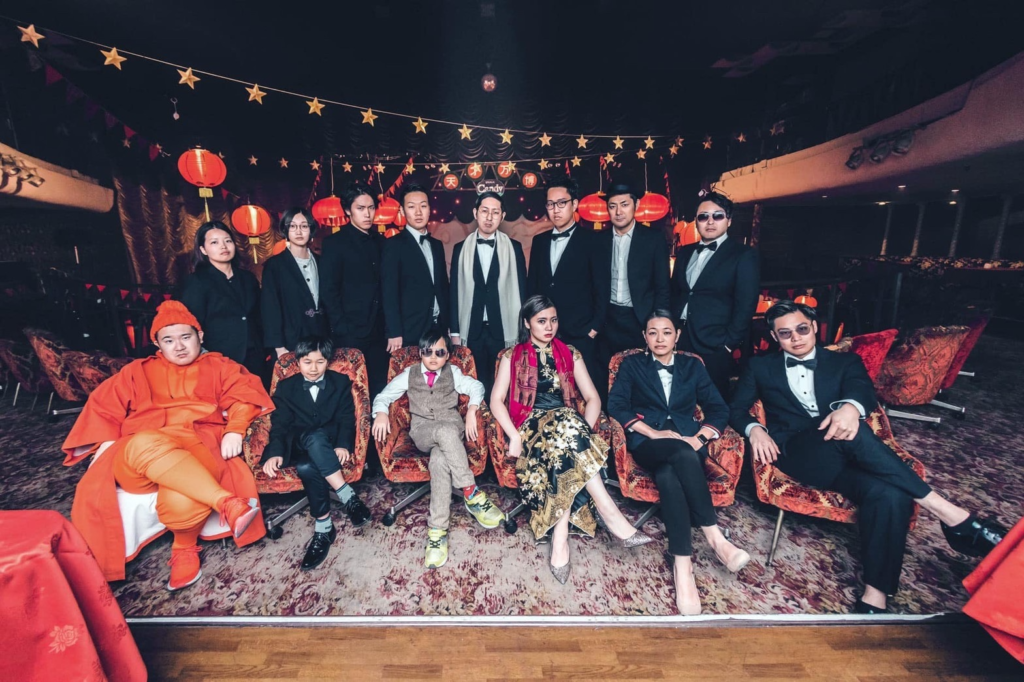
運営スタッフの存在もまた、空間の一部として設計されています。
統一された制服ではなく、えんとつ町のマフィアという設定を共有することで、ボランティアスタッフは自然に物語の登場人物へと変換されます。黒ジャケットと白シャツという現実的な装いは、そのまま世界観へ接続され、会場全体に緩やかな統一感を生み出します。
子どもマフィアやチャイナドレスを纏ったリーダーの存在は、空間に緊張と親しみのバランスを与え、観客が安心して物語へ参加できる心理的距離を調整しています。衣装は演出ではなく、空間の重心を形成する要素として機能しています。
天才万博の会場は、年に一度のイベント空間であると同時に、次回へと連続するメディアでもあります。
煙、光、提灯、装置、人物。来場者が撮影した写真はSNS上で拡散され、体験していない人々にまで世界観を伝播させていきます。
つまりこの空間は、本番でありながら広告撮影会でもあります。
空間そのものが記録され、再解釈され、次の物語の入口となるよう設計されています。
建築は通常、完成された形として語られます。
しかし天才万博において建築は、意味を固定する器ではなく、複数の現実を同時に受け止める環境として扱われました。
東京の劇場であり、年末の音楽フェスであり、えんとつ町の音楽劇場でもある。
それらが重なった状態のまま存在することで、訪れた人は知らないうちに物語の内部へ入り込んでいきます。
艸の枕が設計したのは、ファンタジーそのものではなく、
現実の中に物語が立ち上がる余白でした。
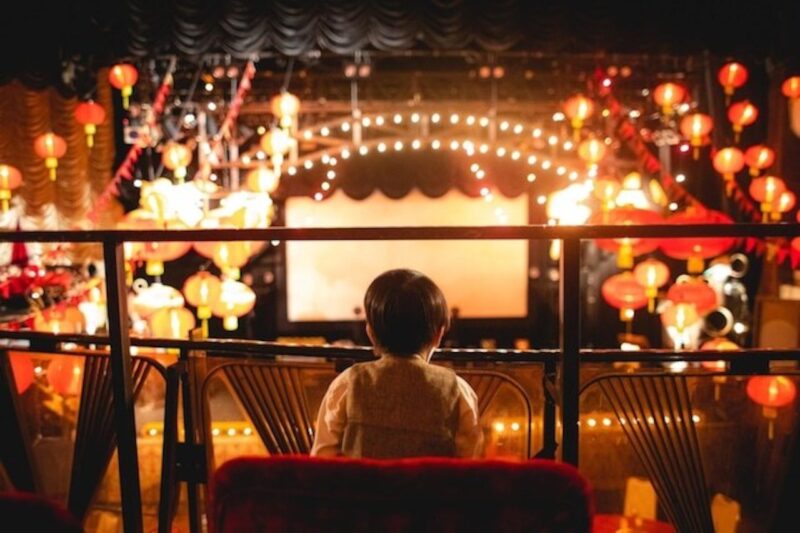
At Tensai Banpaku, the spatial design by Kusanomakura did not aim to recreate fantasy.
The focus was not the story itself, but the structure through which a story could emerge.
Tokyo Kinema Club in Uguisudani, Tokyo, once operated as a cabaret theatre that hosted decades of pleasure and celebration. Visitors cross the station footbridge, pass through a district of love hotels and move along a tunnel-like approach before arriving at the venue. Formed largely by urban coincidence, this sequence simultaneously functions as a gradual transition, shifting bodily perception from the everyday into the extraordinary.
Rather than altering this condition, Tensai Banpaku reinterpreted the existing urban structure itself, recasting the Kinema Club as the Music Theatre of Chimney Town. What mattered was not explaining a fictional world, but introducing a subtle sense of ambiguity into familiar scenery.
Lanterns are suspended overhead. Smoke rises slowly as neon and stage lighting merge in the air. Yet no characters appear, nor is the venue explicitly identified as Chimney Town. Unlike a theme park, visitors are not asked to believe in a narrative; instead, they discover it through their own perception. The space was designed precisely to enable this state.
A tower-like structure installed on stage became its symbolic element. Resembling both chimney and speaker, the structure produces no sound. Smoke released from its base catches the lighting, making beams visible and creating the sensation that sound itself occupies the space.
Meaning is not fixed within the object but completed through interpretation. In this sense, the project approaches a quantum-like understanding of space, where conditions are determined through observation, allowing spatial meaning to reside with the experiencer rather than the designer.
Operational staff were also conceived as part of the spatial composition. Instead of uniforms, volunteers shared the narrative identity of the “Chimney Town Mafia,” naturally transforming into characters within the environment. Black jackets and white shirts — ordinary attire — seamlessly connected reality with fiction, generating a quiet coherence throughout the venue.
The presence of child mafias and leaders dressed in cheongsams introduced a balance between tension and familiarity, carefully adjusting the psychological distance that allowed visitors to participate comfortably. Costume functioned not as performance but as an element shaping the spatial centre of gravity.
Held annually, Tensai Banpaku operates not only as an event space but also as a medium extending into future editions. Smoke, light, lanterns, structures and people are captured and disseminated through social media, transmitting the atmosphere beyond those physically present.
In this sense, the venue functions simultaneously as performance and image production. The space is designed to be recorded, reinterpreted and to become an entry point for the next story.
Architecture is often discussed as a completed form. At Tensai Banpaku, however, architecture was treated instead as an environment capable of holding multiple realities at once: a Tokyo theatre, a year-end music festival and the music theatre of Chimney Town.
By allowing these layers to coexist without resolution, visitors gradually find themselves inside the narrative.
What Kusanomakura ultimately designed was not fantasy itself, but the margin within reality where stories can begin to rise.